Drilling Fluid Disposal in Wyoming: 2026 Compliance Guide
Discover compliant drilling fluid disposal methods in Wyoming, ensuring adherence to regulations and avoiding costly penalties. Learn more!
.webp)
Discover compliant drilling fluid disposal methods in Wyoming, ensuring adherence to regulations and avoiding costly penalties. Learn more!

{
"@graph": [
{
"@type": "Article",
"image": {
"url": "https://csuxjmfbwmkxiegfpljm.supabase.co/storage/v1/object/public/blog-images/organization-34047/1784354598478_Officer-reviewing-Wyoming-drilling-fluid-regulations.jpeg",
"@type": "ImageObject",
"caption": "Officer reviewing Wyoming drilling fluid regulations"
},
"author": {
"url": "https://rockymountainunderground.net",
"name": "Rockymountainunderground",
"@type": "Organization"
},
"headline": "Drilling Fluid Disposal in Wyoming: 2026 Compliance Guide",
"publisher": {
"url": "https://rockymountainunderground.net",
"name": "Rockymountainunderground",
"@type": "Organization"
},
"inLanguage": "en-US",
"description": "Discover compliant drilling fluid disposal methods in Wyoming, ensuring adherence to regulations and avoiding costly penalties. Learn more!",
"datePublished": "2026-07-18T06:15:31.219Z"
},
{
"name": "Drilling Fluid Disposal in Wyoming: 2026 Compliance Guide",
"@type": "ItemList",
"itemListElement": [
{
"item": {
"geo": {
"@type": "GeoCoordinates",
"latitude": 41.087160499999996,
"longitude": -104.95458789999999
},
"url": "https://tristateoil.org/",
"name": "Tri State Oil Reclaimers, Inc",
"@type": "LocalBusiness",
"address": {
"@type": "PostalAddress",
"addressRegion": "Wyoming",
"streetAddress": "1770 Otto Rd, Cheyenne, WY 82001, USA",
"addressLocality": "Cheyenne"
},
"telephone": "+1 307-635-5332",
"areaServed": "Cheyenne",
"aggregateRating": {
"@type": "AggregateRating",
"ratingValue": 4.9,
"reviewCount": 161
}
},
"@type": "ListItem",
"position": 1
},
{
"item": {
"geo": {
"@type": "GeoCoordinates",
"latitude": 42.8542476,
"longitude": -106.33633189999999
},
"url": "http://www.truedrilling.com/",
"name": "True Drilling Company",
"@type": "LocalBusiness",
"address": {
"@type": "PostalAddress",
"addressRegion": "Wyoming",
"streetAddress": "455 N Poplar St 3rd floor, Casper, WY 82601, USA",
"addressLocality": "Casper"
},
"telephone": "+1 307-266-0200",
"areaServed": "Casper",
"aggregateRating": {
"@type": "AggregateRating",
"ratingValue": 4.2,
"reviewCount": 21
}
},
"@type": "ListItem",
"position": 2
},
{
"item": {
"geo": {
"@type": "GeoCoordinates",
"latitude": 42.6609482,
"longitude": -110.9681824
},
"url": "https://maps.google.com/?cid=5407284638487797094&g_mp=Cidnb29nbGUubWFwcy5wbGFjZXMudjEuUGxhY2VzLlNlYXJjaFRleHQQAhgEIAA",
"name": "Big Ridge Pump and Well Drilling Service",
"@type": "LocalBusiness",
"address": {
"@type": "PostalAddress",
"addressRegion": "Wyoming",
"streetAddress": "3790 Bitter Creek Rd, Afton, WY 83110, USA",
"addressLocality": "Afton"
},
"telephone": "+1 307-699-9643",
"areaServed": "Afton",
"aggregateRating": {
"@type": "AggregateRating",
"ratingValue": 5,
"reviewCount": 17
}
},
"@type": "ListItem",
"position": 3
},
{
"item": {
"geo": {
"@type": "GeoCoordinates",
"latitude": 42.867455299999996,
"longitude": -106.406993
},
"url": "https://maps.google.com/?cid=6726766995044308549&g_mp=Cidnb29nbGUubWFwcy5wbGFjZXMudjEuUGxhY2VzLlNlYXJjaFRleHQQAhgEIAA",
"name": "Unit Drilling Co",
"@type": "LocalBusiness",
"address": {
"@type": "PostalAddress",
"addressRegion": "Wyoming",
"streetAddress": "5710 W Yellowstone Hwy, Casper, WY 82604, USA",
"addressLocality": "Casper"
},
"telephone": "+1 307-472-7020",
"areaServed": "Casper",
"aggregateRating": {
"@type": "AggregateRating",
"ratingValue": 4.7,
"reviewCount": 7
}
},
"@type": "ListItem",
"position": 4
},
{
"item": {
"geo": {
"@type": "GeoCoordinates",
"latitude": 43.055172,
"longitude": -108.451394
},
"url": "http://nucordrilling.com/",
"name": "Nucor Drilling",
"@type": "LocalBusiness",
"address": {
"@type": "PostalAddress",
"addressRegion": "Wyoming",
"streetAddress": "4424 Skylane Ave, Riverton, WY 82501, USA",
"addressLocality": "Riverton"
},
"telephone": "+1 307-856-1577",
"areaServed": "Riverton",
"aggregateRating": {
"@type": "AggregateRating",
"ratingValue": 4.8,
"reviewCount": 5
}
},
"@type": "ListItem",
"position": 5
},
{
"item": {
"geo": {
"@type": "GeoCoordinates",
"latitude": 43.774924899999995,
"longitude": -108.5749099
},
"url": "https://maps.google.com/?cid=14865069636371812401&g_mp=Cidnb29nbGUubWFwcy5wbGFjZXMudjEuUGxhY2VzLlNlYXJjaFRleHQQAhgEIAA",
"name": "Saddlehorn Drilling Inc.",
"@type": "LocalBusiness",
"address": {
"@type": "PostalAddress",
"addressRegion": "Wyoming",
"streetAddress": "2510 Hamilton Dome Rd, Thermopolis, WY 82443, USA",
"addressLocality": "Thermopolis"
},
"telephone": "+1 307-921-9553",
"areaServed": "Thermopolis",
"aggregateRating": {
"@type": "AggregateRating",
"ratingValue": 5,
"reviewCount": 4
}
},
"@type": "ListItem",
"position": 6
}
]
},
{
"@type": "BreadcrumbList",
"itemListElement": [
{
"item": "https://rockymountainunderground.net",
"name": "Rockymountainunderground",
"@type": "ListItem",
"position": 1
},
{
"item": "https://rockymountainunderground.net/drilling-fluid-disposal",
"name": "Drilling Fluid Disposal in Wyoming: 2026 Compliance Guide",
"@type": "ListItem",
"position": 2
}
]
}
],
"@context": "https://schema.org"
}
{
"@type": "FAQPage",
"@context": "https://schema.org",
"mainEntity": [
{
"name": "How do you dispose of drilling fluid?",
"@type": "Question",
"acceptedAnswer": {
"text": "Drilling fluid is disposed of through land application, solidification and landfill acceptance, or approved downhole injection. Each method requires passing applicable regulatory tests, including the EPA Paint Filter Liquids Test for landfill-bound waste.",
"@type": "Answer"
}
},
{
"name": "How do you dispose of directional drilling mud?",
"@type": "Question",
"acceptedAnswer": {
"text": "Directional drilling mud must be collected in reserve pits or tanks, treated to remove free liquids through dewatering or solidification, and then transported to an approved disposal facility. In Wyoming, discharge to surface waters or drainage channels is prohibited under state rules.",
"@type": "Answer"
}
},
{
"name": "What is solid waste disposal?",
"@type": "Question",
"acceptedAnswer": {
"text": "Solid waste disposal is the managed removal of non-liquid waste materials to approved facilities such as permitted landfills. For drilling fluids, waste must pass the PFLT to confirm no free liquids are present before a landfill will accept it under RCRA Subtitle D.",
"@type": "Answer"
}
},
{
"name": "Does the RCRA hazardous waste exemption cover all drilling fluid disposal?",
"@type": "Question",
"acceptedAnswer": {
"text": "No. The RCRA Subtitle C exemption removes federal hazardous waste classification for most E&P drilling fluids, but disposal still falls under RCRA Subtitle D and Wyoming's own DEQ and Oil and Gas Conservation Commission rules, which are independently enforceable.",
"@type": "Answer"
}
}
]
}
Drilling fluid disposal in Wyoming requires choosing from three primary methods: land application, solidification followed by landfill acceptance, and downhole injection under strict regulatory approval. Each method carries specific compliance obligations under both federal and state rules, and selecting the wrong approach can trigger costly rejections or enforcement actions.
Key disposal methods and compliance essentials for Wyoming operators:
Engaging a local contractor familiar with Wyoming’s specific rules reduces compliance risk and accelerates project timelines.
Six verified contractors serve Wyoming operators across the full spectrum of drilling waste management, from fluid recycling to landfill-ready solidification.
ProviderServices OfferedIndustry FocusService AreaRatingRegulatory Compliance SupportTri State Oil Reclaimers, IncDrilling fluid disposal, waste managementOil and gas E&PCheyenne, WY and surrounding region4.9★ (161 reviews)YesTrue Drilling CompanyLand drilling, fluid disposalOil and gas, geothermal, carbon captureCasper, WY and Rocky Mountain region4.2★ (21 reviews)YesBig Ridge Pump and Well Drilling ServiceGeneral drilling, waste servicesGeneral contractorWyoming5★ (17 reviews)—Unit Drilling CoGeneral drillingGeneral contractorWyoming4.7★ (7 reviews)YesNucor DrillingEnvironmental and mineral drilling, fluid managementEnvironmental, mineral, oil and gasRiverton, WY and surrounding region4.8★ (5 reviews)YesSaddlehorn Drilling Inc.Drilling, fluid disposal supportGeneral contractorWyoming5★ (4 reviews)—
Tri State Oil Reclaimers, Inc is the most specialized option for operators whose primary concern is compliant fluid disposal near Cheyenne. The company focuses specifically on drilling fluid disposal and waste management for oil and gas clients, which means their workflows are built around Wyoming DEQ requirements rather than adapted from general drilling operations.
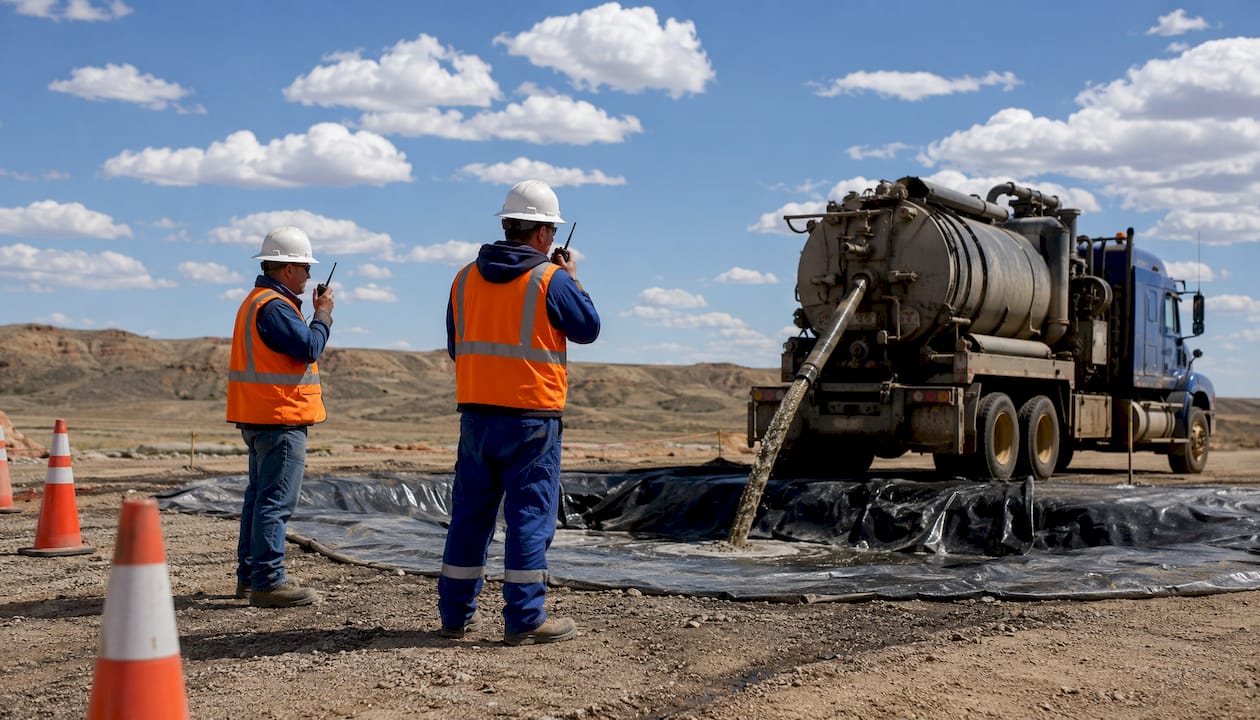
True Drilling Company in Casper brings a distinct advantage for operators working on energy transition projects. Their experience spans conventional oil and gas, geothermal drilling, and carbon capture, making them a practical choice when a project’s waste stream involves non-standard fluid chemistries that require careful disposal planning.
Nucor Drilling in Riverton covers both environmental and mineral drilling, with integrated regulatory compliance support. For operators who need a single contractor to manage drilling and waste disposal under one compliance umbrella, Nucor’s service structure reduces coordination overhead.
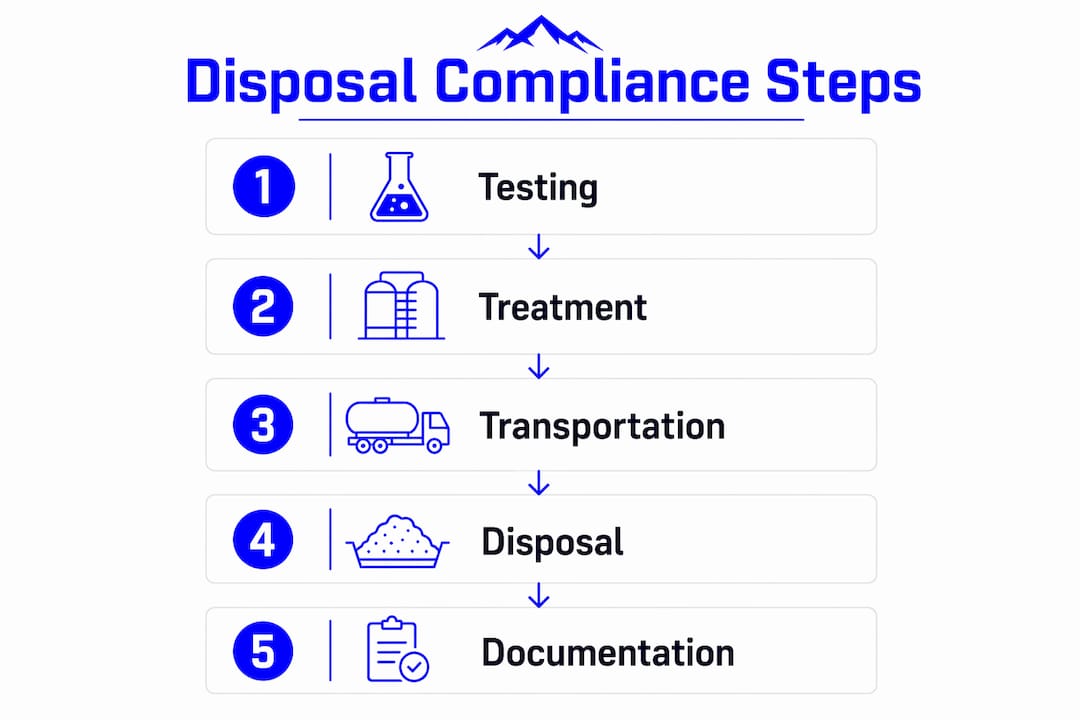
Big Ridge Pump and Well Drilling Service and Saddlehorn Drilling Inc. both serve Wyoming operators with general drilling and disposal support. Neither publishes detailed compliance credentials, so they suit straightforward projects where disposal complexity is low.
Unit Drilling Co focuses on operational efficiency for smaller-scale drilling projects and offers local regulatory knowledge that benefits operators navigating Wyoming-specific permit requirements.
Drilling fluids are exempt from federal hazardous waste regulation under RCRA Subtitle C, but that exemption does not mean disposal is unregulated. These wastes fall squarely under RCRA Subtitle D as non-hazardous solid waste, and Wyoming’s own rules add a second, often stricter, layer of requirements.
Key regulations and tests Wyoming operators must know:
Pro Tip: Run the PFLT on-site before transporting waste to a landfill. A failed test at the gate means transport costs with no disposal, plus potential regulatory scrutiny if free liquids are observed during transit.
Disposal planning integrated from the start of project design consistently avoids the costly delays that come from waiting until reserve pits are full. Volume estimation, storage capacity, transport logistics, and treatment method selection all need to be locked in before drilling begins, not after.
Cost factors that affect disposal budgets include:
Safety protocols for personnel handling drilling waste must address skin and respiratory exposure to fluid additives, proper containment during transfer, and spill response readiness. Emergency spill management plans should identify the nearest approved disposal facility, designate a response coordinator, and pre-position absorbent materials at the drill site.
Pro Tip: Invest in advanced solidification methods early. Contractors that use modern polymer-based solidification agents reduce waste volume before transport, which directly cuts tipping fees and lowers the risk of landfill rejection.
Wyoming’s terrain and environmental sensitivity create disposal challenges that operators in less regulated states rarely encounter. High-altitude sites, proximity to sensitive watersheds, and the state’s strict prohibition on surface water discharge mean that standard disposal approaches used elsewhere may not be permissible here.
Free liquids are the most common cause of landfill rejection in Wyoming. Landfill operators prioritize strict testing because free liquids damage leachate collection and treatment systems, and a single rejected load can disrupt an entire project’s disposal schedule. Operators who do not pre-treat waste before transport often face both the cost of returning the load and the expense of emergency solidification in the field.
Practical steps Wyoming operators use to address these challenges:
Local contractors familiar with Wyoming’s geology and regulatory environment, such as Tri State Oil Reclaimers or Nucor Drilling, reduce the risk of compliance gaps that out-of-state operators often miss on their first Wyoming project.
If your project involves horizontal directional drilling or hydrovac excavation alongside fluid waste concerns, Rocky Mountain Underground provides a complementary path to the disposal-focused contractors compared above.
Rocky Mountain Underground specializes in HDD and hydrovac services for underground utility projects, with a focus on safety protocols, equipment reliability, and transparent project coordination. Where the providers in this comparison focus on waste stream management after drilling, Rocky Mountain Underground’s approach reduces the volume and complexity of drilling waste at the source by applying precise, controlled drilling methods that minimize fluid use and ground disturbance. For contractors, engineers, and municipalities managing underground infrastructure in Wyoming and the Rocky Mountain region, that upstream precision translates directly into simpler disposal logistics downstream.
Drilling fluid is disposed of through land application, solidification and landfill acceptance, or approved downhole injection. Each method requires passing applicable regulatory tests, including the EPA Paint Filter Liquids Test for landfill-bound waste.
Directional drilling mud must be collected in reserve pits or tanks, treated to remove free liquids through dewatering or solidification, and then transported to an approved disposal facility. In Wyoming, discharge to surface waters or drainage channels is prohibited under state rules.
Solid waste disposal is the managed removal of non-liquid waste materials to approved facilities such as permitted landfills. For drilling fluids, waste must pass the PFLT to confirm no free liquids are present before a landfill will accept it under RCRA Subtitle D.
No. The RCRA Subtitle C exemption removes federal hazardous waste classification for most E&P drilling fluids, but disposal still falls under RCRA Subtitle D and Wyoming’s own DEQ and Oil and Gas Conservation Commission rules, which are independently enforceable.
Compliant drilling fluid disposal in Wyoming requires passing the EPA Paint Filter Liquids Test, meeting Wyoming DEQ standards, and engaging contractors with direct experience in state-specific rules.
PointDetailsPFLT is the landfill gatewayWaste must pass EPA Method 9095B, with no liquid through a 60-mesh cone in 5 minutes, before landfill acceptance.RCRA exemption has limitsFederal Subtitle C exemption does not remove state obligations; Wyoming DEQ and WOGCC rules apply independently.Downhole disposal thresholdOne-time downhole injection requires the disposal interval to contain water exceeding 10,000 mg/l total dissolved solids.Plan disposal before drilling startsIntegrating waste volume estimates and transport logistics at project design avoids costly last-minute disposal failures.Rocky Mountain UndergroundOffers HDD and hydrovac services that reduce drilling waste volume at the source, simplifying downstream disposal logistics.
Drilling fluid disposal in Wyoming requires choosing from three primary methods: land application, solidification followed by landfill acceptance, and downhole injection under strict regulatory approval. Each method carries specific compliance obligations under both federal and state rules, and selecting the wrong approach can trigger costly rejections or enforcement actions.
Key disposal methods and compliance essentials for Wyoming operators:
Land application: Approved for non-hazardous drilling muds when soil conditions and sodium exchange rates meet Wyoming DEQ standards. Solids with high exchangeable sodium content require encapsulation or removal to prevent soil damage.
Solidification and landfill acceptance: Waste must pass the EPA Paint Filter Liquids Test (PFLT, Method 9095B) before a landfill will accept it. A sample fails if any liquid passes through a 60-mesh filter cone within 5 minutes.
Downhole disposal: The Wyoming Oil and Gas Conservation Commission may approve one-time downhole injection when the disposal interval contains water with total dissolved solids exceeding 10,000 mg/l.
Recycling and transfer: Wyoming encourages drilling fluid recycling by administrative action; transferred fluids reused on another lease are not classified as waste.
Regulatory oversight: Wyoming DEQ and the Wyoming Oil and Gas Conservation Commission govern state-level compliance. Operations on federal lands also fall under Bureau of Land Management jurisdiction.
Engaging a local contractor familiar with Wyoming’s specific rules reduces compliance risk and accelerates project timelines.
Six verified contractors serve Wyoming operators across the full spectrum of drilling waste management, from fluid recycling to landfill-ready solidification.
| Provider | Services Offered | Industry Focus | Service Area | Rating | Regulatory Compliance Support |
|---|---|---|---|---|---|
| Tri State Oil Reclaimers, Inc | Drilling fluid disposal, waste management | Oil and gas E&P | Cheyenne, WY and surrounding region | 4.9★ (161 reviews) | Yes |
| True Drilling Company | Land drilling, fluid disposal | Oil and gas, geothermal, carbon capture | Casper, WY and Rocky Mountain region | 4.2★ (21 reviews) | Yes |
| Big Ridge Pump and Well Drilling Service | General drilling, waste services | General contractor | Wyoming | 5★ (17 reviews) | — |
| Unit Drilling Co | General drilling | General contractor | Wyoming | 4.7★ (7 reviews) | Yes |
| Nucor Drilling | Environmental and mineral drilling, fluid management | Environmental, mineral, oil and gas | Riverton, WY and surrounding region | 4.8★ (5 reviews) | Yes |
| Saddlehorn Drilling Inc. | Drilling, fluid disposal support | General contractor | Wyoming | 5★ (4 reviews) | — |
Tri State Oil Reclaimers, Inc is the most specialized option for operators whose primary concern is compliant fluid disposal near Cheyenne. The company focuses specifically on drilling fluid disposal and waste management for oil and gas clients, which means their workflows are built around Wyoming DEQ requirements rather than adapted from general drilling operations.
True Drilling Company in Casper brings a distinct advantage for operators working on energy transition projects. Their experience spans conventional oil and gas, geothermal drilling, and carbon capture, making them a practical choice when a project’s waste stream involves non-standard fluid chemistries that require careful disposal planning.
Nucor Drilling in Riverton covers both environmental and mineral drilling, with integrated regulatory compliance support. For operators who need a single contractor to manage drilling and waste disposal under one compliance umbrella, Nucor’s service structure reduces coordination overhead.
Big Ridge Pump and Well Drilling Service and Saddlehorn Drilling Inc. both serve Wyoming operators with general drilling and disposal support. Neither publishes detailed compliance credentials, so they suit straightforward projects where disposal complexity is low.
Unit Drilling Co focuses on operational efficiency for smaller-scale drilling projects and offers local regulatory knowledge that benefits operators navigating Wyoming-specific permit requirements.
Drilling fluids are exempt from federal hazardous waste regulation under RCRA Subtitle C, but that exemption does not mean disposal is unregulated. These wastes fall squarely under RCRA Subtitle D as non-hazardous solid waste, and Wyoming’s own rules add a second, often stricter, layer of requirements.
Key regulations and tests Wyoming operators must know:
RCRA Subtitle D: Governs non-hazardous solid waste disposal at the federal level; E&P wastes including drilling fluids fall under this framework.
Wyoming DEQ solid waste rules: Set minimum standards for oilfield waste disposal facilities statewide.
Wyoming Oil and Gas Conservation Commission rules: Prohibit discharge of drilling fluids to surface waters or drainages leading to live waters. Closure of pits by evaporation or percolation is explicitly prohibited.
EPA Method 9095B (PFLT): A 60-mesh filter cone test run for 5 minutes determines whether free liquids are present. Any liquid collecting in the graduated cylinder means the waste fails and cannot go to a standard landfill without further treatment.
BLM jurisdiction: Operations on federal lands require BLM approval in addition to state permits, including approval for drilling fluid transfers intended for recycling.
Downhole disposal approval: Applications must demonstrate the disposal interval contains water exceeding 10,000 mg/l total dissolved solids and that underground sources of drinking water will not be affected.
Pro Tip: Run the PFLT on-site before transporting waste to a landfill. A failed test at the gate means transport costs with no disposal, plus potential regulatory scrutiny if free liquids are observed during transit.
Disposal planning integrated from the start of project design consistently avoids the costly delays that come from waiting until reserve pits are full. Volume estimation, storage capacity, transport logistics, and treatment method selection all need to be locked in before drilling begins, not after.
Cost factors that affect disposal budgets include:
Dewatering or solidification treatment before landfill acceptance
Tipping fees, which increase when waste fails the PFLT and requires retreatment
Transport distance to approved disposal facilities
Solidification additive selection: granular super-absorbent polymers achieve liquid absorption with lower bulk volume increase than traditional additives like kiln dust or fly ash, reducing total disposal tonnage
Safety protocols for personnel handling drilling waste must address skin and respiratory exposure to fluid additives, proper containment during transfer, and spill response readiness. Emergency spill management plans should identify the nearest approved disposal facility, designate a response coordinator, and pre-position absorbent materials at the drill site.
Pro Tip: Invest in advanced solidification methods early. Contractors that use modern polymer-based solidification agents reduce waste volume before transport, which directly cuts tipping fees and lowers the risk of landfill rejection.
Wyoming’s terrain and environmental sensitivity create disposal challenges that operators in less regulated states rarely encounter. High-altitude sites, proximity to sensitive watersheds, and the state’s strict prohibition on surface water discharge mean that standard disposal approaches used elsewhere may not be permissible here.
Free liquids are the most common cause of landfill rejection in Wyoming. Landfill operators prioritize strict testing because free liquids damage leachate collection and treatment systems, and a single rejected load can disrupt an entire project’s disposal schedule. Operators who do not pre-treat waste before transport often face both the cost of returning the load and the expense of emergency solidification in the field.
Practical steps Wyoming operators use to address these challenges:
Pre-screen waste with an on-site PFLT before transport
Select solidification additives matched to the specific fluid chemistry, not a generic product
Coordinate with the disposal facility before the project begins to confirm acceptance criteria
For sodium-rich solids, arrange encapsulation or off-site removal rather than attempting land application
Use contractors with direct experience in Wyoming DEQ requirements to avoid permit delays
Local contractors familiar with Wyoming’s geology and regulatory environment, such as Tri State Oil Reclaimers or Nucor Drilling, reduce the risk of compliance gaps that out-of-state operators often miss on their first Wyoming project.
If your project involves horizontal directional drilling or hydrovac excavation alongside fluid waste concerns, Rocky Mountain Underground provides a complementary path to the disposal-focused contractors compared above.
Rocky Mountain Underground specializes in HDD and hydrovac services for underground utility projects, with a focus on safety protocols, equipment reliability, and transparent project coordination. Where the providers in this comparison focus on waste stream management after drilling, Rocky Mountain Underground’s approach reduces the volume and complexity of drilling waste at the source by applying precise, controlled drilling methods that minimize fluid use and ground disturbance. For contractors, engineers, and municipalities managing underground infrastructure in Wyoming and the Rocky Mountain region, that upstream precision translates directly into simpler disposal logistics downstream.
Drilling fluid is disposed of through land application, solidification and landfill acceptance, or approved downhole injection. Each method requires passing applicable regulatory tests, including the EPA Paint Filter Liquids Test for landfill-bound waste.
Directional drilling mud must be collected in reserve pits or tanks, treated to remove free liquids through dewatering or solidification, and then transported to an approved disposal facility. In Wyoming, discharge to surface waters or drainage channels is prohibited under state rules.
Solid waste disposal is the managed removal of non-liquid waste materials to approved facilities such as permitted landfills. For drilling fluids, waste must pass the PFLT to confirm no free liquids are present before a landfill will accept it under RCRA Subtitle D.
No. The RCRA Subtitle C exemption removes federal hazardous waste classification for most E&P drilling fluids, but disposal still falls under RCRA Subtitle D and Wyoming’s own DEQ and Oil and Gas Conservation Commission rules, which are independently enforceable.
Compliant drilling fluid disposal in Wyoming requires passing the EPA Paint Filter Liquids Test, meeting Wyoming DEQ standards, and engaging contractors with direct experience in state-specific rules.
| Point | Details |
|---|---|
| PFLT is the landfill gateway | Waste must pass EPA Method 9095B, with no liquid through a 60-mesh cone in 5 minutes, before landfill acceptance. |
| RCRA exemption has limits | Federal Subtitle C exemption does not remove state obligations; Wyoming DEQ and WOGCC rules apply independently. |
| Downhole disposal threshold | One-time downhole injection requires the disposal interval to contain water exceeding 10,000 mg/l total dissolved solids. |
| Plan disposal before drilling starts | Integrating waste volume estimates and transport logistics at project design avoids costly last-minute disposal failures. |
| Rocky Mountain Underground | Offers HDD and hydrovac services that reduce drilling waste volume at the source, simplifying downstream disposal logistics. |
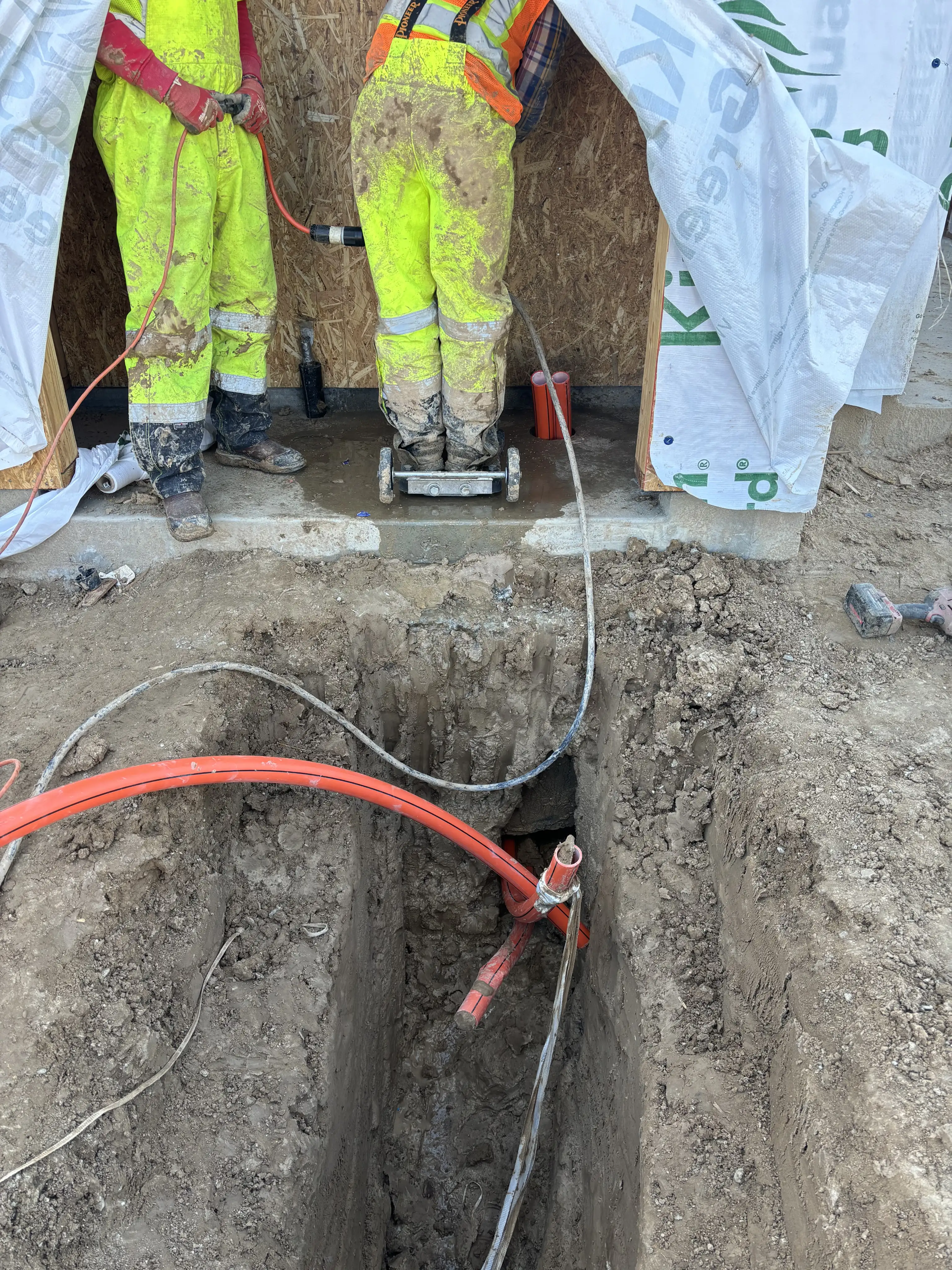
Continue learning with additional articles focused on underground construction, safety, and project planning:



%20(1).webp)