Potholing for Utilities: A 2026 Safety Guide

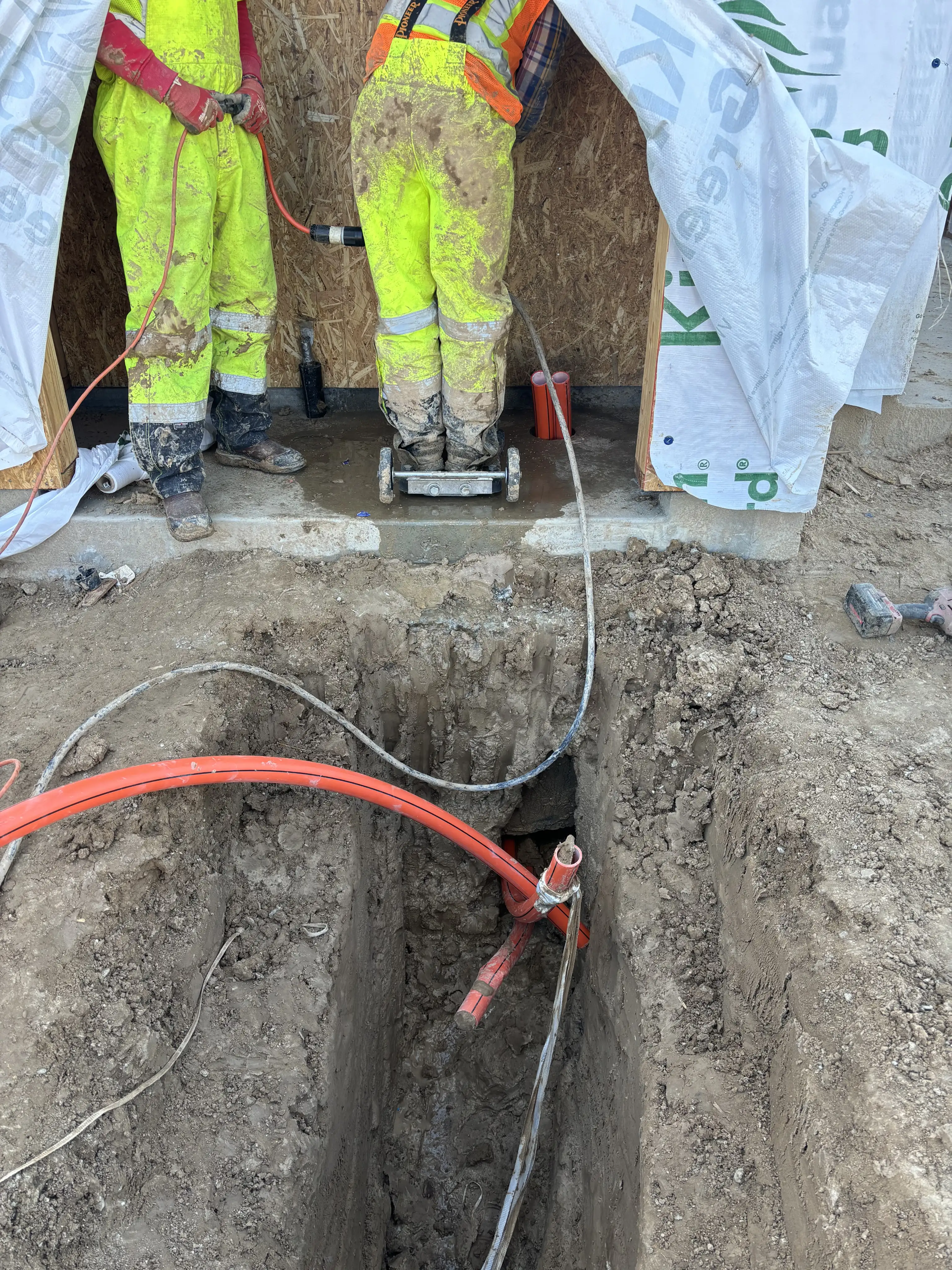
Potholing for utilities is the process of physically exposing underground utilities to verify their exact location and depth before any excavation begins. Known formally as vacuum excavation or soft dig, this technique gives contractors, engineers, and project managers the ground truth that surface markings alone cannot provide. Utility strikes drop by over 90% when teams pothole before breaking ground. In Wyoming, where frozen ground, remote infrastructure, and aging utility records create real uncertainty, that risk reduction is not optional. ASCE 38 Quality Level A accuracy and OSHA compliance both depend on it.
     {
 "@type": "Article",
 "image": {
   "url": "https://csuxjmfbwmkxiegfpljm.supabase.co/storage/v1/object/public/blog-images/organization-34047/1784241711594_Utility-technician-overseeing-potholing-excavation.jpeg",
   "@type": "ImageObject",
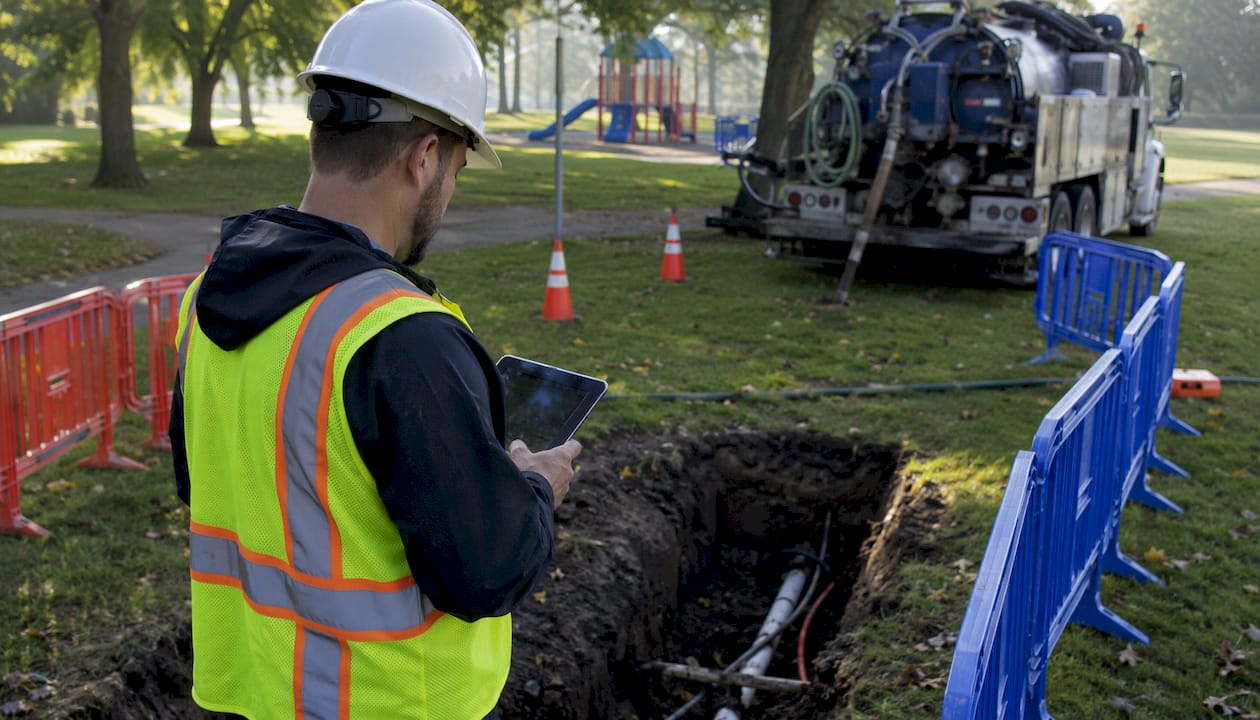
   "caption": "Utility technician overseeing potholing excavation"
 },
 "author": {
   "url": "https://rockymountainunderground.net",
   "name": "Rockymountainunderground",
   "@type": "Organization"
 },
 "@context": "https://schema.org",
 "headline": "Potholing for Utilities: A 2026 Safety Guide",
 "publisher": {
   "url": "https://rockymountainunderground.net",
   "name": "Rockymountainunderground",
   "@type": "Organization"
 },
 "inLanguage": "en-US",
 "description": "Learn about potholing for utilities in 2026. Understand its importance for safety and accuracy, reducing utility strikes by over 90%.",
 "datePublished": "2026-07-16T22:42:05.256Z"
}
     
     {
 "@type": "FAQPage",
 "@context": "https://schema.org",
 "mainEntity": [
   {
     "name": "What is potholing for utilities?",
     "@type": "Question",
     "acceptedAnswer": {
       "text": "Potholing for utilities is the physical excavation of a small test hole using vacuum or hand methods to expose and verify the exact depth, position, and material of a buried utility line before construction begins.",
       "@type": "Answer"
     }
   },
   {
     "name": "How does potholing differ from standard 811 locating?",
     "@type": "Question",
     "acceptedAnswer": {
       "text": "An 811 locate marks an approximate search corridor but does not confirm depth or exact position. Potholing provides ASCE 38 Quality Level A accuracy by physically exposing the utility.",
       "@type": "Answer"
     }
   },
   {
     "name": "What does potholing cost per hole?",
     "@type": "Question",
     "acceptedAnswer": {
       "text": "Potholing typically costs between $300 and $1,500 per hole depending on soil conditions, excavation method, and site access. Large projects requiring 10–30 potholes may total between $5,000 and $45,000.",
       "@type": "Answer"
     }
   },
   {
     "name": "When should potholes be spaced along a utility run?",
     "@type": "Question",
     "acceptedAnswer": {
       "text": "Standard practice calls for potholes every 100–200 feet along parallel utility runs and at both sides of every utility crossing to prevent missed conflicts.",
       "@type": "Answer"
     }
   },
   {
     "name": "Is air or hydro vacuum better for potholing?",
     "@type": "Question",
     "acceptedAnswer": {
       "text": "Air vacuum is preferred near gas lines and fiber optics because it keeps soil dry and avoids water damage. Hydro vacuum works faster in hard or compacted soils but produces slurry that requires disposal.\n\n",
       "@type": "Answer"
     }
   }
 ]
}
     

Potholing for utilities is the process of physically exposing underground utilities to verify their exact location and depth before any excavation begins. Known formally as vacuum excavation or soft dig, this technique gives contractors, engineers, and project managers the ground truth that surface markings alone cannot provide. Utility strikes drop by over 90% when teams pothole before breaking ground. In Wyoming, where frozen ground, remote infrastructure, and aging utility records create real uncertainty, that risk reduction is not optional. ASCE 38 Quality Level A accuracy and OSHA compliance both depend on it.
What is potholing for utilities and why does it matter?

Potholing is the controlled excavation of a small test hole to physically expose a buried utility and confirm its horizontal position, depth, and material. Surface markings from an 811 call only define a search corridor of roughly 24 inches on each side of a marked line. That corridor does not tell you whether a gas main is 18 inches deep or 6 feet deep. Only a pothole does.

The distinction matters because mechanical excavators cannot safely operate inside the legally mandated tolerance zone of 18–24 inches around any marked utility. Inside that zone, only non-destructive excavation methods are permitted. Potholing is the standard method for working within that zone safely and legally.

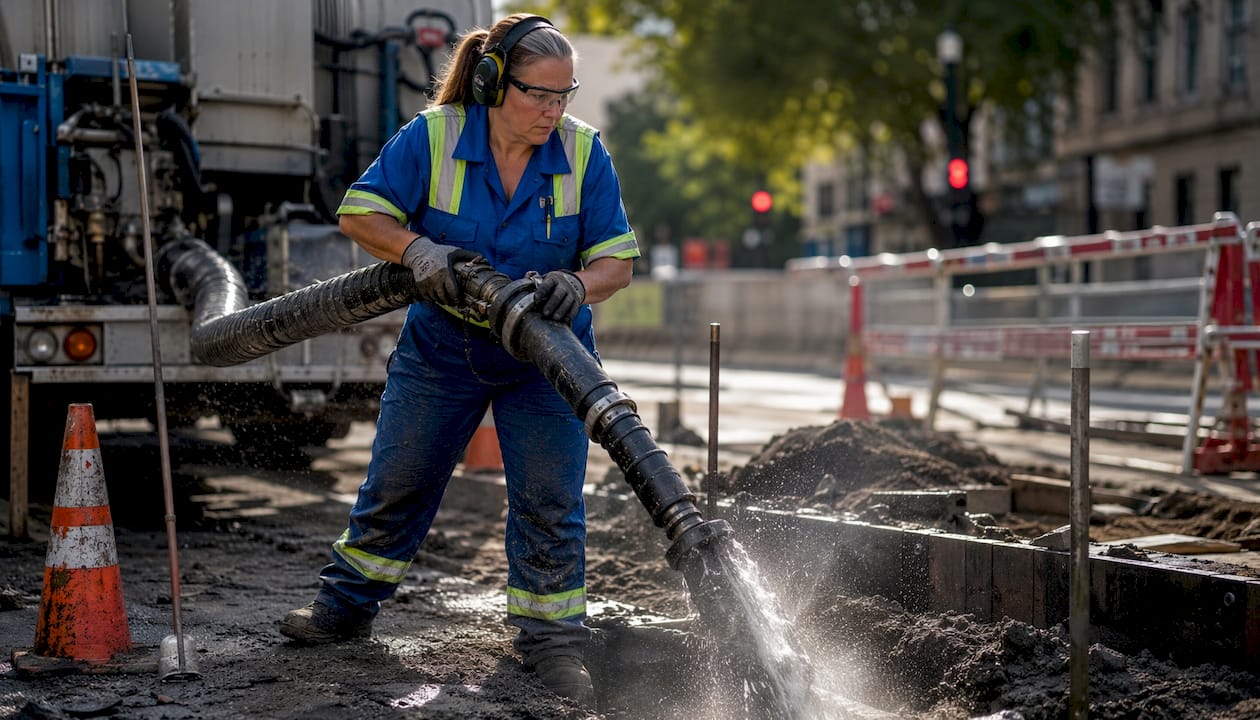
Operator using hydro vacuum excavation equipment safely

Subsurface Utility Engineering (SUE) classifies utility data into four quality levels. Quality Level D relies on existing records. Quality Level A, the highest standard, requires physical exposure through potholing. For any project where a utility conflict could cause injury, service disruption, or redesign costs, Level A data is the professional standard.

What equipment and safety measures are essential for effective potholing?

Two primary technologies drive modern pothole excavation techniques: air vacuum excavation and hydro vacuum excavation. Each has a defined role depending on soil type and the utilities present.

Equipment typeBest applicationKey considerationAir vacuum truckNear fiber optics, gas linesKeeps soil dry and reusable as backfillHydro vacuum truckHard or compacted soilsCreates wet slurry requiring disposalHand tools (trowels, probes)Final exposure near utility surfacePrevents coating damage on last inch

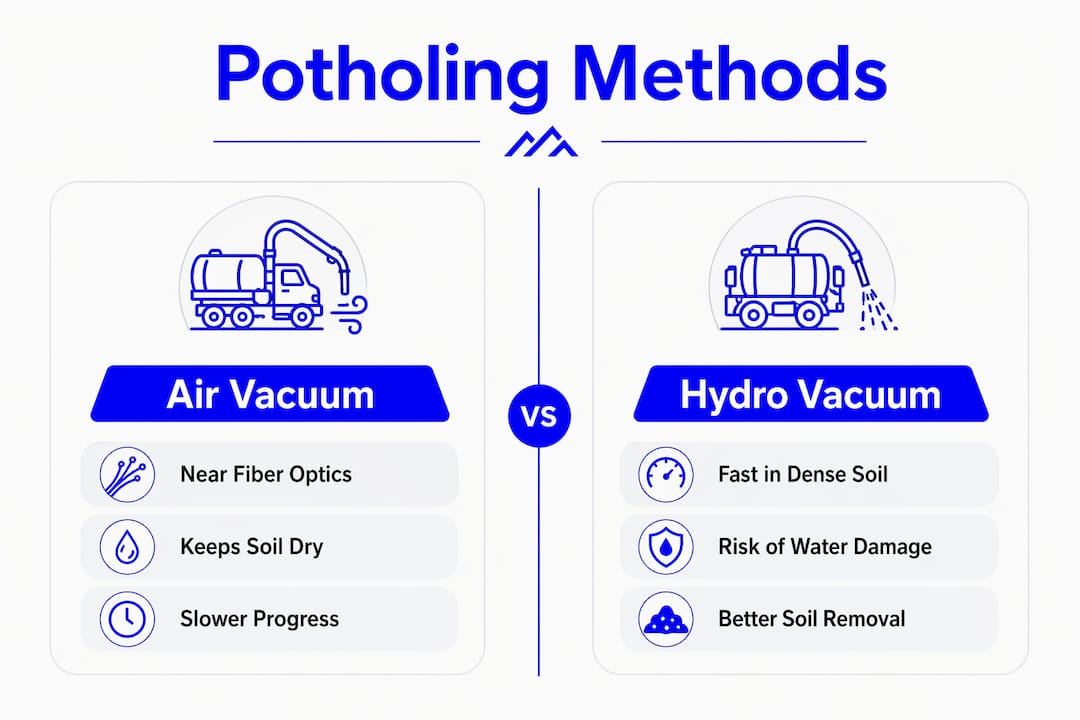
Infographic comparing air and hydro vacuum potholing methods

Air excavation keeps soil dry and suitable for reuse, which reduces backfill costs. Hydro vacuum moves faster in dense Wyoming soils like caliche or compacted clay, but the resulting slurry requires off-site disposal, adding cost and logistics. Teams working near gas distribution lines or fiber optic bundles should default to air vacuum to avoid water infiltration damage.

OSHA standards require protective systems for any excavation 5 feet or deeper, including sloping, shoring, or trench boxes. Daily inspections by a competent person are mandatory. Common violations include spoil piles placed too close to the trench edge and missing ladder access for workers. Even a pothole that deepens unexpectedly must meet these requirements.

Key safety requirements for any potholing operation:

Pro Tip: Start vacuum pressure at the lowest effective setting for your soil type and increase only as needed. This prevents damage to utility coatings and reduces the risk of breaching a line during exposure.

How to pothole utilities: a step-by-step process

A repeatable process reduces errors and keeps crews safe. The following sequence applies to most utility potholing projects in Wyoming, from pipeline corridors to urban street crossings.

Pro Tip: Bring a laser level or digital depth gauge to every potholing operation. Eyeballed depth estimates introduce errors that compound during design. Measured data is the only data worth recording.

The table below summarizes when to use each excavation method during the potholing process.

MethodWhen to useLimitationAir vacuumNear gas, fiber optics, or dry soilsSlower in hard or wet groundHydro vacuumHard, compacted, or rocky soilsSlurry disposal requiredHand diggingFinal 6 inches of exposureLabor intensive, slow

Common mistakes in utility potholing and how to avoid them

The most common mistake teams make is treating 811 paint marks as exact utility locations. Surface markings define a search corridor, not a pinpoint. Assuming a gas line is directly under the paint and at a standard depth has caused preventable strikes on projects across Wyoming and the broader Mountain West.

Spacing potholes too far apart is the second most frequent error. Insufficient pothole density leaves utility conflicts undetected until a machine hits something. For parallel runs, every 100–200 feet is the accepted standard. At crossings, both sides of the intersection require verification regardless of how clear the surface markings appear.

Additional mistakes that cause delays and damage:

Operator competency matters more than equipment brand. An experienced operator reading soil behavior in real time prevents cave-ins and utility damage that no machine specification can prevent.


Incorrect excavation in unstable soils presents significant cave-in hazards even in small test holes. Soil classification training is not optional. It is the difference between a safe pothole and a reportable incident.

Why potholing during the design phase saves more money

Design-phase potholing, conducted as part of a formal Subsurface Utility Engineering program, delivers a return that reactive conflict resolution during construction cannot match. When engineers have ASCE 38 Quality Level A data before design is finalized, they can adjust pipe alignments, change invert elevations, and reroute conflicts on paper rather than in the field.

The cost difference is significant. Potholing costs typically range from $300 to $1,500 per pothole depending on method and soil conditions. A project requiring 20 potholes might spend $15,000 during design. A single utility conflict discovered during active construction can generate change orders, RFIs, and schedule delays that cost multiples of that figure.

Benefits of integrating potholing into the design phase:

Design-phase potholing also protects the project owner. When a contractor can show documented Quality Level A data at every conflict point, liability for unforeseen utility conditions shifts significantly. That documentation is worth more than its cost on any project with complex underground infrastructure.

What I’ve learned from watching projects skip this step

After working on utility projects across Wyoming and Colorado, the pattern is consistent. Teams that treat potholing as a budget line to cut always pay more later. The projects that run clean are the ones where the engineer ordered potholes during design, not after the first machine hit something unexpected.

The detail that most contractors underestimate is operator competency. I’ve seen projects where a newer operator used hydro vacuum at full pressure within inches of a plastic gas main. The coating was compromised. The line had to be repaired before backfill. That repair cost more than the entire potholing budget for the project. Equipment brand had nothing to do with it. Pressure control and soil awareness did.

Wyoming’s ground conditions add a layer of complexity that generic guides ignore. Freeze-thaw cycles shift utilities vertically. Caliche layers make depth prediction unreliable. Abandoned agricultural lines appear where no record exists. These conditions make thorough, well-spaced potholing more critical here than in regions with stable soils and complete utility records.

The teams I trust are the ones who document every pothole with measured depth, material, and a photograph. That data protects the contractor, the engineer, and the owner. Skipping documentation to save 10 minutes per hole is a liability decision, not an efficiency decision.

Rocky Mountain Underground supports safe utility exposure in Wyoming

https://rockymountainunderground.net

Rocky Mountain Underground provides hydrovac excavation services built for the precision that utility potholing demands. Whether your project requires design-phase SUE data collection or construction-phase conflict resolution, Rocky Mountain Underground’s crews operate with documented OSHA compliance, calibrated vacuum equipment, and trained operators who understand Wyoming’s soil conditions. Every pothole is measured, photographed, and recorded to Quality Level A standards. If your project involves unknown utilities, tight tolerances, or complex underground infrastructure, contact Rocky Mountain Underground to discuss your excavation scope and get a project consultation.

FAQ

What is potholing for utilities?

Potholing for utilities is the physical excavation of a small test hole using vacuum or hand methods to expose and verify the exact depth, position, and material of a buried utility line before construction begins.

How does potholing differ from standard 811 locating?

An 811 locate marks an approximate search corridor but does not confirm depth or exact position. Potholing provides ASCE 38 Quality Level A accuracy by physically exposing the utility.

What does potholing cost per hole?

Potholing typically costs between $300 and $1,500 per hole depending on soil conditions, excavation method, and site access. Large projects requiring 10–30 potholes may total between $5,000 and $45,000.

When should potholes be spaced along a utility run?

Standard practice calls for potholes every 100–200 feet along parallel utility runs and at both sides of every utility crossing to prevent missed conflicts.

Is air or hydro vacuum better for potholing?

Air vacuum is preferred near gas lines and fiber optics because it keeps soil dry and avoids water damage. Hydro vacuum works faster in hard or compacted soils but produces slurry that requires disposal.

Key takeaways

Potholing for utilities is the only method that delivers ASCE 38 Quality Level A accuracy, and performing it during the design phase consistently costs less than resolving conflicts during active construction.

PointDetailsPotholing reduces strike riskPhysical exposure cuts utility strike risk by over 90% compared to relying on surface markings alone.Tolerance zones are legally bindingMechanical excavation is prohibited within 18–24 inches of marked utilities; only soft dig methods are allowed.Design-phase potholing saves moneyEarly SUE data prevents costly field change orders and redesigns during active construction.Operator skill drives safetySoil classification knowledge and pressure control matter more than equipment brand on any potholing site. 811 does not cover private utilitiesIrrigation lines, abandoned conduits, and private fiber require supplemental locating beyond the standard 811 call.

Contact us

Planning an Underground Utility Project?

If you need support with hydrovac excavation, HDD, or utility locating, our team is ready to help you complete your project safely and efficiently.