Flowable Fill Backfill: A Practical Guide for Contractors
Discover the benefits of flowable fill backfill for contractors. Learn why this material is essential for utility trenches and excavations.
.webp)
Discover the benefits of flowable fill backfill for contractors. Learn why this material is essential for utility trenches and excavations.
TL;DR:
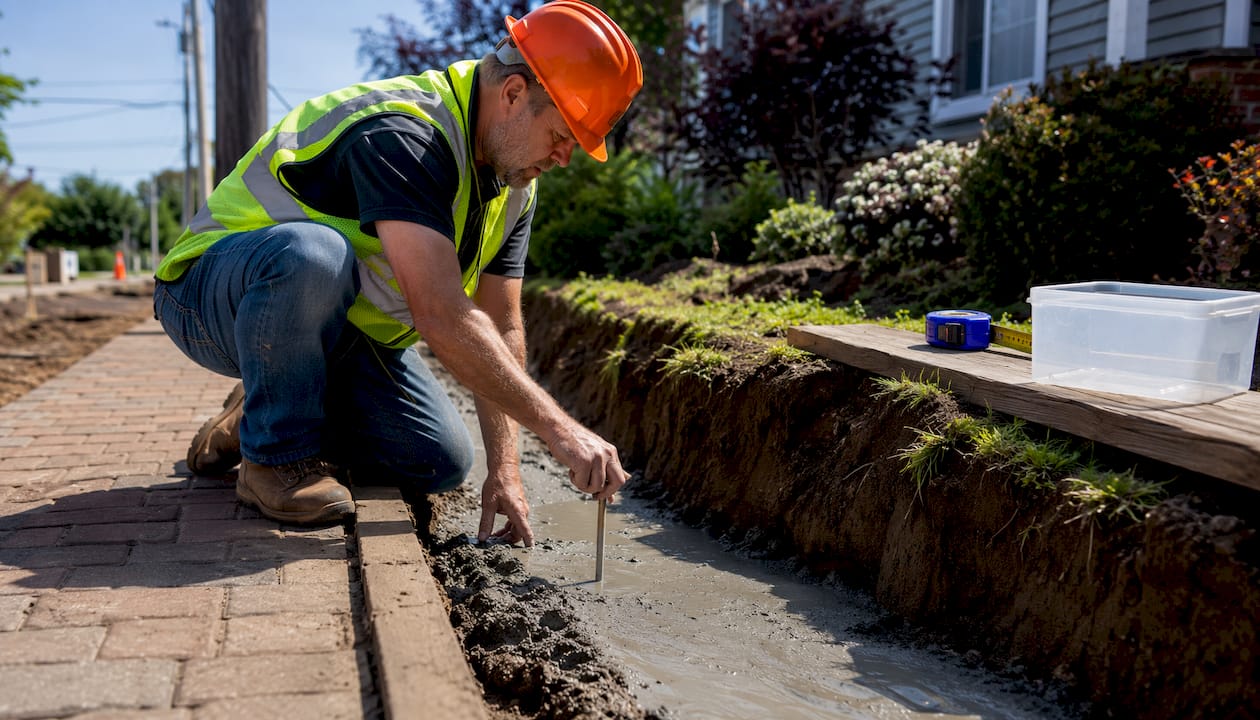
- Flowable fill backfill is a self-leveling cementitious slurry used instead of traditional compacted earth in utility trenches and irregular excavations. Its safety, speed, and predictable performance improve construction efficiency, especially in urban environments, despite higher material costs. Proper mix design and placement conditions are essential to maximize its benefits and ensure long-term reliability.
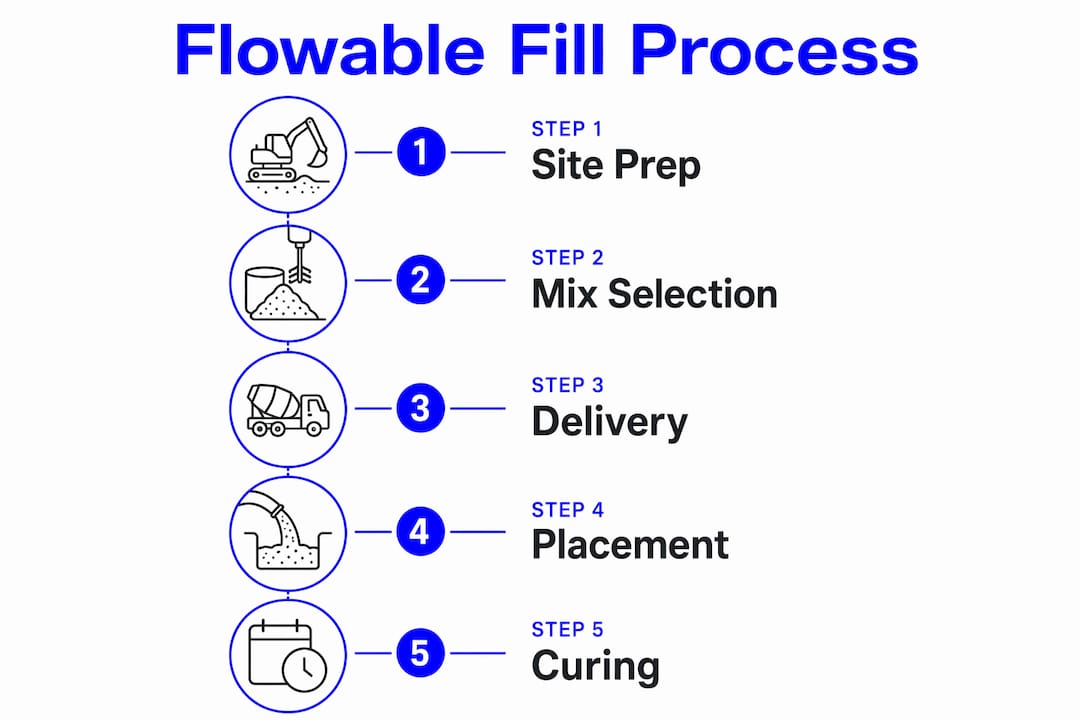
Flowable fill backfill is a self-leveling, cementitious slurry used in place of compacted earth in utility trenches, pipe embedment zones, and irregular excavations. The American Concrete Institute defines it as a self-compacting cementitious material in a flowable state at placement with a compressive strength of 1,200 psi or less at 28 days. Most utility trench applications target strengths well below that ceiling, typically under 300 psi, to preserve future excavability.
The industry uses several names for this material interchangeably: controlled low strength material (CLSM), controlled density fill (CDF), lean concrete slurry, and unshrinkable fill. Regardless of the label, the core composition stays consistent: fine aggregate or filler (usually sand or fly ash), Portland cement or supplementary cementitious materials, and water.
Key benefits that make it the preferred choice for utility trench backfill:
Rocky Mountain Underground applies this material knowledge directly in Colorado underground utility projects, where tight timelines, urban traffic constraints, and soil variability make consistent backfill performance critical.
The single most significant safety advantage of CLSM is straightforward: workers stay out of the trench. Trench cave-ins are among the most serious hazards in utility construction, and flowable fill eliminates the need for personnel to enter and compact material in lifts. That alone changes the risk profile of a project.
Beyond safety, the operational gains compound quickly:
Pro Tip: Place flowable fill only when ambient and trench soil temperatures are above 40°F. Cold conditions slow set time and can compromise strength development. In Colorado’s mountain and high-plains environments, early morning placements in spring and fall carry real risk of frost interference — schedule pours for midday when temperatures are confirmed stable.
Flowable fill carries a higher material unit cost than granular backfill. That is a straightforward fact, and project managers need to account for it in initial budgeting. However, total project costs typically decrease when the full picture is considered.
Where the savings accumulate:
Fly ash incorporation also reduces material costs while improving flowability, making recycled byproducts a practical cost lever. Logistics do add cost: ready-mix truck scheduling, slurry transport timing, and batch plant coordination require planning. Poorly timed deliveries can negate placement speed advantages, so that coordination is not optional.
Mix design is where performance is won or lost. Target 28-day compressive strengths between 50 and 100 psi for most utility trench applications. That range provides bearing capacity comparable to well-compacted soil while keeping the material excavable with standard backhoe equipment. Exceeding 100 psi makes future excavation significantly harder and should be avoided unless the specification explicitly requires it.
Site preparation and placement practices that matter most:
Pro Tip: Coordinate ready-mix deliveries so trucks arrive at intervals that match your placement rate. Delivery timing is a direct cost and quality factor — a truck sitting idle loses workability, and gaps in placement can create cold joints or inconsistent fill density.
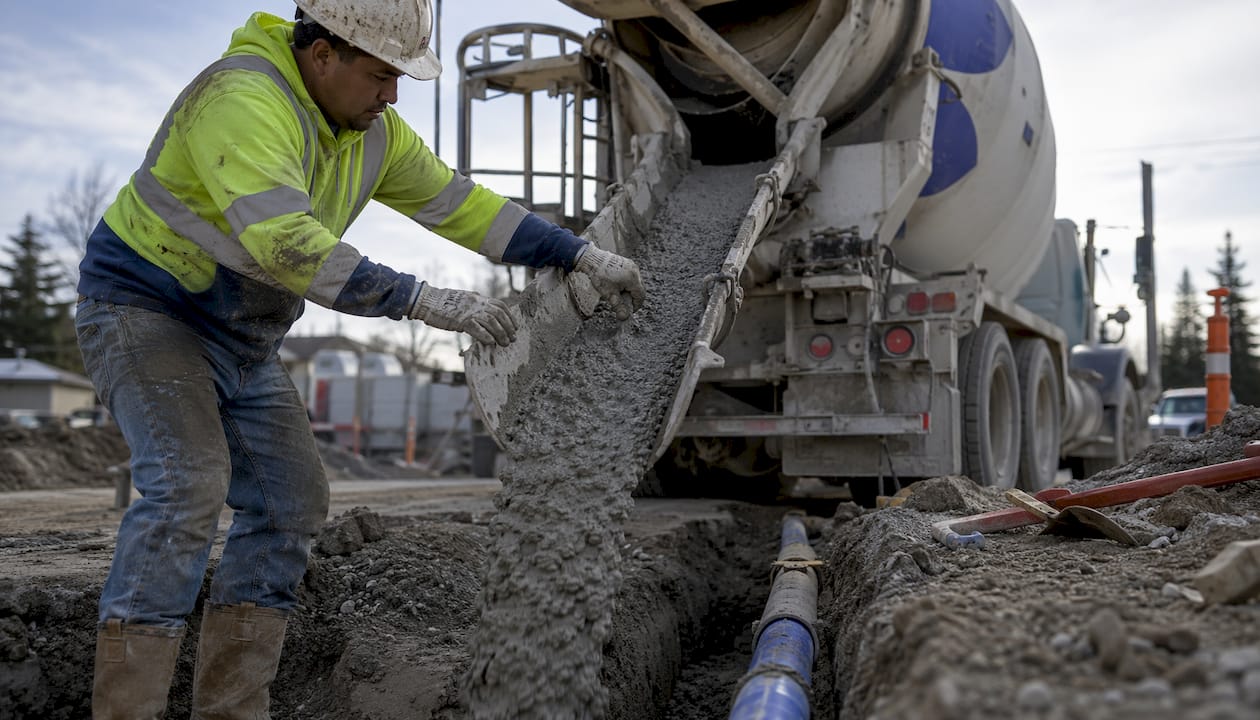
For contractors and engineers working underground utility projects in Colorado, the case for CLSM comes down to three factors: safety, schedule, and reliability. Eliminating trench entry for compaction removes one of the most serious hazards in the work. Faster placement and early load-bearing compress project timelines. And consistent, void-free fill prevents the settlement failures that generate costly callbacks and pavement repairs.
The material cost premium is real, but it is routinely offset by labor, equipment, and rework savings. Projects with tight urban schedules, complex pipe configurations, or difficult soil conditions see the strongest returns. Quality materials chosen for the right application consistently outperform cheaper alternatives when total project cost is the measure.
Rocky Mountain Underground brings this approach to every underground utility project in Colorado, combining precise excavation methods with informed material selection to keep projects on schedule and workers safe.
Mix design selection depends on application requirements, future excavation needs, and available materials. The main categories:
Standard sand-cement CLSM uses Portland cement, concrete sand, and water. It is the most common mix, batched at ready-mix plants and delivered by transit mixer. Strength is controlled by cement content and water-cement ratio.
High fly ash content mixes replace most or all of the sand filler with Class F (pozzolanic) fly ash. These mixes are lighter, more flowable, and lower in strength, making them well-suited for applications where future excavation is likely. Fly ash content can be very high by weight of total mix in some formulations.
Low fly ash content mixes use Class C (self-cementing) fly ash in smaller quantities, typically 15% or less, either alongside Portland cement or as a partial replacement. These mixes develop strength faster and are used when early load-bearing is a priority.
Low-density CLSM incorporates preformed foaming agents to reduce unit weight significantly, down to as low as 20 lb/ft³ in some formulations. These mixes suit applications requiring reduced dead load, thermal insulation, or easy future excavation.
Native soil mixes use trench-excavated soil as the aggregate, processed with cement and water using trench-side mixing equipment or portable batch plants. This approach reduces spoil pile volume and eliminates aggregate hauling, making it practical for large-diameter pipeline projects.
CLSM offers measurable sustainability advantages over conventional granular backfill, particularly in urban utility work. Narrower trenches mean less excavation energy, smaller spoil piles, fewer truck trips, and reduced community disruption. In Colorado’s urban corridors, that translates directly to lower carbon output per project.
Fly ash use diverts a power plant byproduct from landfills and reduces the Portland cement demand in the mix, lowering the embodied carbon of the material. Native soil incorporation goes further, eliminating aggregate import entirely for suitable projects.
The Plastic Pipe Institute identifies three sustainability principles for flowable fill: reduce (less excavation and handling), recycle (fly ash and other waste materials), and reuse (native trench soils as aggregate). Each principle reduces energy consumption and material waste across the project lifecycle.
Granular backfill requires compaction in lifts, personnel in the trench, and compaction testing at each lift. Flowable fill requires none of that. The tradeoff is material cost: granular fill is cheaper per ton, but the labor, equipment, and inspection costs associated with proper compaction often exceed the material savings on complex or urban projects.
Granular fill performance depends heavily on moisture content, compaction effort, and inspector diligence. Flowable fill performance is largely independent of those variables once the mix design is confirmed. That predictability reduces project risk, particularly on projects where settlement-related pavement failures carry warranty or liability exposure.
One area where granular fill holds an advantage: it requires no special handling for pipe flotation and no temperature restrictions during placement. Flowable fill demands more planning around those factors.
Pipe flotation is the most frequently reported field problem. Lightweight thermoplastic pipes will rise during fill placement if not anchored. The fix is straightforward: sandbags, rebar cradles, or mechanical anchors applied before placement begins.
Premature hardening occurs when trucks sit too long before discharge or when ambient temperatures are high. Coordinate delivery intervals to match placement rate and avoid midday pours in summer heat without accelerated scheduling.
Subsidence affects high-water-content mixes. Solid materials settle as excess water bleeds out, causing surface depression of roughly 1/4 inch per foot of fill depth. Low-density or lower-water mixes reduce this effect.
Corrosion concerns arise with metal pipes in direct contact with certain mix chemistries. Specifying mixes with appropriate pH and resistivity, and using polyethylene sleeving where needed, addresses this.
Contractor resistance is common on first-use projects. Engineers who specify CLSM for the first time often encounter pushback on material cost. Presenting the full cost comparison, including labor, equipment, and rework, typically resolves it.
Hardening time depends on cement content, fly ash type and quantity, water content, and ambient temperature. Mixes containing approximately 5% cement typically reach a surface hardness sufficient to support a person’s weight within 1–4 hours. Within 24 hours, construction equipment can generally move across the surface without damage.
Full 28-day strength development follows a curve similar to concrete but at much lower absolute values. For utility trench applications targeting 50–100 psi, the material reaches working strength well before the 28-day mark under normal conditions. Cold weather extends that timeline; temperatures below 40°F can halt strength gain entirely until conditions improve.
Traffic restoration timing depends on the specific mix and project specification. Some fast-set mixes allow pavement placement approximately one hour after backfilling. Standard mixes typically require several hours before light traffic and 24 hours before construction equipment loading.
Flowable fill backfill delivers superior safety, schedule, and quality outcomes for utility trench work when the mix design is matched to project requirements and placement conditions are properly managed.
| Point | Details |
|---|---|
| Target strength range | Mix designs for utility trenches should hit 50–100 psi at 28 days to balance support with future excavability. |
| Safety advantage | Eliminating trench entry for compaction removes one of the most serious hazards in underground utility work. |
| Cost offset | Higher material cost is routinely recovered through labor, equipment, and rework savings across the project. |
| Pipe flotation risk | Anchor lightweight thermoplastic pipes with sandbags, rebar, or mechanical anchors before placement begins. |
| Temperature limits | Placement requires temperatures above 40°F and unfrozen trench soils to achieve proper strength development. |
Flowable fill is used primarily as a backfill material for utility trenches, pipe embedment, bridge abutments, and abandoned underground structures where compacted granular fill is impractical or too slow to place.
Most utility trench applications target 28-day compressive strengths between 50 and 100 psi, which provides bearing capacity comparable to well-compacted soil while remaining excavable with standard backhoe equipment.
No. Its self-compacting nature eliminates the need for lift-by-lift compaction and the associated density testing, which is one of the primary efficiency advantages over traditional granular backfill.
Many mixes support traffic within several hours of placement; some fast-set formulations allow pavement placement approximately one hour after backfilling, though standard mixes typically require 24 hours before construction equipment loading.
Placement should occur only when ambient and trench soil temperatures are above 40°F. Frozen trench conditions or post-placement freezing during curing will compromise strength development and should be avoided.
TL;DR:
- Flowable fill backfill is a self-leveling cementitious slurry used instead of traditional compacted earth in utility trenches and irregular excavations. Its safety, speed, and predictable performance improve construction efficiency, especially in urban environments, despite higher material costs. Proper mix design and placement conditions are essential to maximize its benefits and ensure long-term reliability.
Flowable fill backfill is a self-leveling, cementitious slurry used in place of compacted earth in utility trenches, pipe embedment zones, and irregular excavations. The American Concrete Institute defines it as a self-compacting cementitious material in a flowable state at placement with a compressive strength of 1,200 psi or less at 28 days. Most utility trench applications target strengths well below that ceiling, typically under 300 psi, to preserve future excavability.
The industry uses several names for this material interchangeably: controlled low strength material (CLSM), controlled density fill (CDF), lean concrete slurry, and unshrinkable fill. Regardless of the label, the core composition stays consistent: fine aggregate or filler (usually sand or fly ash), Portland cement or supplementary cementitious materials, and water.
Key benefits that make it the preferred choice for utility trench backfill:
Rocky Mountain Underground applies this material knowledge directly in Colorado underground utility projects, where tight timelines, urban traffic constraints, and soil variability make consistent backfill performance critical.
The single most significant safety advantage of CLSM is straightforward: workers stay out of the trench. Trench cave-ins are among the most serious hazards in utility construction, and flowable fill eliminates the need for personnel to enter and compact material in lifts. That alone changes the risk profile of a project.
Beyond safety, the operational gains compound quickly:
Pro Tip: Place flowable fill only when ambient and trench soil temperatures are above 40°F. Cold conditions slow set time and can compromise strength development. In Colorado’s mountain and high-plains environments, early morning placements in spring and fall carry real risk of frost interference — schedule pours for midday when temperatures are confirmed stable.
Flowable fill carries a higher material unit cost than granular backfill. That is a straightforward fact, and project managers need to account for it in initial budgeting. However, total project costs typically decrease when the full picture is considered.
Where the savings accumulate:
Fly ash incorporation also reduces material costs while improving flowability, making recycled byproducts a practical cost lever. Logistics do add cost: ready-mix truck scheduling, slurry transport timing, and batch plant coordination require planning. Poorly timed deliveries can negate placement speed advantages, so that coordination is not optional.
Mix design is where performance is won or lost. Target 28-day compressive strengths between 50 and 100 psi for most utility trench applications. That range provides bearing capacity comparable to well-compacted soil while keeping the material excavable with standard backhoe equipment. Exceeding 100 psi makes future excavation significantly harder and should be avoided unless the specification explicitly requires it.
Site preparation and placement practices that matter most:
Pro Tip: Coordinate ready-mix deliveries so trucks arrive at intervals that match your placement rate. Delivery timing is a direct cost and quality factor — a truck sitting idle loses workability, and gaps in placement can create cold joints or inconsistent fill density.
For contractors and engineers working underground utility projects in Colorado, the case for CLSM comes down to three factors: safety, schedule, and reliability. Eliminating trench entry for compaction removes one of the most serious hazards in the work. Faster placement and early load-bearing compress project timelines. And consistent, void-free fill prevents the settlement failures that generate costly callbacks and pavement repairs.
The material cost premium is real, but it is routinely offset by labor, equipment, and rework savings. Projects with tight urban schedules, complex pipe configurations, or difficult soil conditions see the strongest returns. Quality materials chosen for the right application consistently outperform cheaper alternatives when total project cost is the measure.
Rocky Mountain Underground brings this approach to every underground utility project in Colorado, combining precise excavation methods with informed material selection to keep projects on schedule and workers safe.
Mix design selection depends on application requirements, future excavation needs, and available materials. The main categories:
Standard sand-cement CLSM uses Portland cement, concrete sand, and water. It is the most common mix, batched at ready-mix plants and delivered by transit mixer. Strength is controlled by cement content and water-cement ratio.
High fly ash content mixes replace most or all of the sand filler with Class F (pozzolanic) fly ash. These mixes are lighter, more flowable, and lower in strength, making them well-suited for applications where future excavation is likely. Fly ash content can be very high by weight of total mix in some formulations.
Low fly ash content mixes use Class C (self-cementing) fly ash in smaller quantities, typically 15% or less, either alongside Portland cement or as a partial replacement. These mixes develop strength faster and are used when early load-bearing is a priority.
Low-density CLSM incorporates preformed foaming agents to reduce unit weight significantly, down to as low as 20 lb/ft³ in some formulations. These mixes suit applications requiring reduced dead load, thermal insulation, or easy future excavation.
Native soil mixes use trench-excavated soil as the aggregate, processed with cement and water using trench-side mixing equipment or portable batch plants. This approach reduces spoil pile volume and eliminates aggregate hauling, making it practical for large-diameter pipeline projects.
CLSM offers measurable sustainability advantages over conventional granular backfill, particularly in urban utility work. Narrower trenches mean less excavation energy, smaller spoil piles, fewer truck trips, and reduced community disruption. In Colorado’s urban corridors, that translates directly to lower carbon output per project.
Fly ash use diverts a power plant byproduct from landfills and reduces the Portland cement demand in the mix, lowering the embodied carbon of the material. Native soil incorporation goes further, eliminating aggregate import entirely for suitable projects.
The Plastic Pipe Institute identifies three sustainability principles for flowable fill: reduce (less excavation and handling), recycle (fly ash and other waste materials), and reuse (native trench soils as aggregate). Each principle reduces energy consumption and material waste across the project lifecycle.
Granular backfill requires compaction in lifts, personnel in the trench, and compaction testing at each lift. Flowable fill requires none of that. The tradeoff is material cost: granular fill is cheaper per ton, but the labor, equipment, and inspection costs associated with proper compaction often exceed the material savings on complex or urban projects.
Granular fill performance depends heavily on moisture content, compaction effort, and inspector diligence. Flowable fill performance is largely independent of those variables once the mix design is confirmed. That predictability reduces project risk, particularly on projects where settlement-related pavement failures carry warranty or liability exposure.
One area where granular fill holds an advantage: it requires no special handling for pipe flotation and no temperature restrictions during placement. Flowable fill demands more planning around those factors.
Pipe flotation is the most frequently reported field problem. Lightweight thermoplastic pipes will rise during fill placement if not anchored. The fix is straightforward: sandbags, rebar cradles, or mechanical anchors applied before placement begins.
Premature hardening occurs when trucks sit too long before discharge or when ambient temperatures are high. Coordinate delivery intervals to match placement rate and avoid midday pours in summer heat without accelerated scheduling.
Subsidence affects high-water-content mixes. Solid materials settle as excess water bleeds out, causing surface depression of roughly 1/4 inch per foot of fill depth. Low-density or lower-water mixes reduce this effect.
Corrosion concerns arise with metal pipes in direct contact with certain mix chemistries. Specifying mixes with appropriate pH and resistivity, and using polyethylene sleeving where needed, addresses this.
Contractor resistance is common on first-use projects. Engineers who specify CLSM for the first time often encounter pushback on material cost. Presenting the full cost comparison, including labor, equipment, and rework, typically resolves it.
Hardening time depends on cement content, fly ash type and quantity, water content, and ambient temperature. Mixes containing approximately 5% cement typically reach a surface hardness sufficient to support a person’s weight within 1–4 hours. Within 24 hours, construction equipment can generally move across the surface without damage.
Full 28-day strength development follows a curve similar to concrete but at much lower absolute values. For utility trench applications targeting 50–100 psi, the material reaches working strength well before the 28-day mark under normal conditions. Cold weather extends that timeline; temperatures below 40°F can halt strength gain entirely until conditions improve.
Traffic restoration timing depends on the specific mix and project specification. Some fast-set mixes allow pavement placement approximately one hour after backfilling. Standard mixes typically require several hours before light traffic and 24 hours before construction equipment loading.
Flowable fill backfill delivers superior safety, schedule, and quality outcomes for utility trench work when the mix design is matched to project requirements and placement conditions are properly managed.
| Point | Details |
|---|---|
| Target strength range | Mix designs for utility trenches should hit 50–100 psi at 28 days to balance support with future excavability. |
| Safety advantage | Eliminating trench entry for compaction removes one of the most serious hazards in underground utility work. |
| Cost offset | Higher material cost is routinely recovered through labor, equipment, and rework savings across the project. |
| Pipe flotation risk | Anchor lightweight thermoplastic pipes with sandbags, rebar, or mechanical anchors before placement begins. |
| Temperature limits | Placement requires temperatures above 40°F and unfrozen trench soils to achieve proper strength development. |
Flowable fill is used primarily as a backfill material for utility trenches, pipe embedment, bridge abutments, and abandoned underground structures where compacted granular fill is impractical or too slow to place.
Most utility trench applications target 28-day compressive strengths between 50 and 100 psi, which provides bearing capacity comparable to well-compacted soil while remaining excavable with standard backhoe equipment.
No. Its self-compacting nature eliminates the need for lift-by-lift compaction and the associated density testing, which is one of the primary efficiency advantages over traditional granular backfill.
Many mixes support traffic within several hours of placement; some fast-set formulations allow pavement placement approximately one hour after backfilling, though standard mixes typically require 24 hours before construction equipment loading.
Placement should occur only when ambient and trench soil temperatures are above 40°F. Frozen trench conditions or post-placement freezing during curing will compromise strength development and should be avoided.
Continue learning with additional articles focused on underground construction, safety, and project planning:



%20(1).webp)